
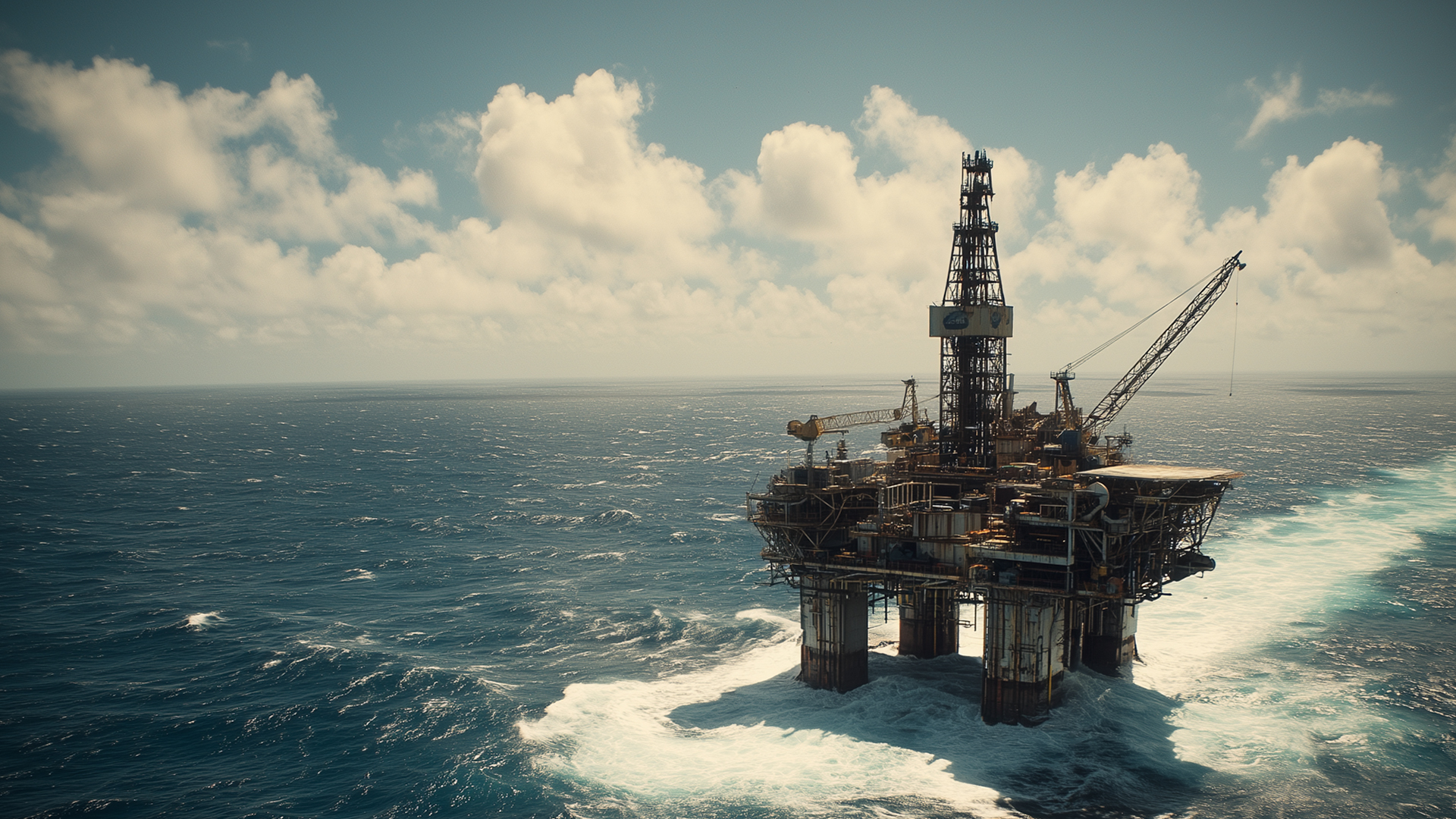
Off-shore-and-marine assets, such as jack-up legs, FPSO hulls, riser manifolds, and port cranes, live in saltwater 24/7, battered by waves, UV, and abrasive cargo handling. A blister the size of a coin in the splash zone can bloom into deep pitting, jeopardizing structural integrity and forcing costly dry-dock or shutdown.
IMO’s Performance Standard for Protective Coatings (PSPC) sets a 15-year target for ballast-tank coatings, and classification societies such as DNV have tightened 2025 rules on hull corrosion allowances. Meeting those targets hinges on flawless surface prep and verification; recent AMPP studies still place zinc-rich primers at the top of the defensive stack.
How we help
We open every engagement with a rope-access coating & steel survey. Certified inspectors verify dry-film thickness, adhesion, and corrosion rating against ISO 4628-3 and ASTM D610, map rust distribution with SSPC VIS 2, and log each anomaly in a geo-tagged report.
During fabrication, dry-dock, or topside maintenance, our NACE/AMPP team monitors ambient conditions to ASTM E 337, confirms blast profile and cleanliness, and checks every coat for DFT per SSPC-PA 2. Daily photo sets and remedial punch lists keep contractors honest and class surveyors satisfied.
The NWTI edge
- Offshore-ready crew: HUET, TWIC, and confined-space certified, able to reach flare booms by rope or drone.
- Vendor-neutral reporting: Decisions are driven by data, not paint sales.
- Holistic view: Welding, API, and failure-analysis specialists trace corrosion to its root and stop repeat failures. API Inspection Failure analysis
- Two decades offshore: From Gulf of Mexico platforms to Atlantic wind turbines, we’ve logged more than 3 000 inspections with a 98 % defect-resolution rate.
When failure isn’t an option, we make sure your coatings—and your crew—are ready for the sea.